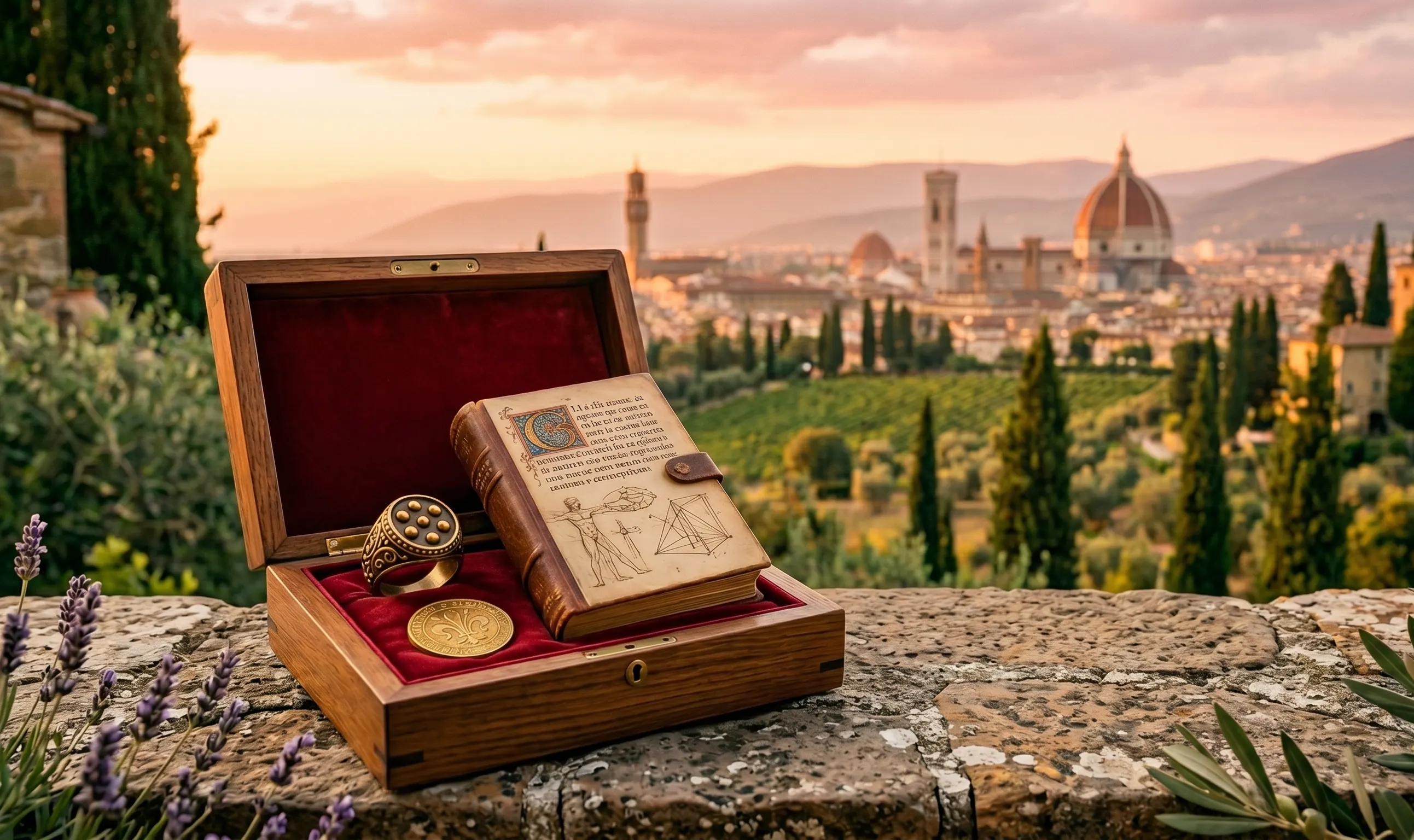
Cultural Course

The Italian Renaissance

Step into the Golden Age of Art, Innovation & Thought. Discover the art, architecture, and ideas that shaped modern Europe in this immersive course.

Explore Italy's Artistic Revolution

Step into the heart of the Renaissance and experience the golden age of art, science, and philosophy. This immersive course takes you through the masterpieces of Michelangelo, Da Vinci, and Botticelli, the architectural marvels of Brunelleschi, and the literary genius of Machiavelli. Learn how this era redefined creativity, reshaped political thought, and laid the foundation for modern Europe. Whether you're captivated by breathtaking frescoes, humanist ideals, or the cultural shifts of 15th and 16th-century Italy, this course offers a deeper connection to one of history's most transformative periods.

A 24-Lesson Academic Journey

Course Breakdown

PART I

The Early Renaissance & The 1400s

1.

Italy in the 1400s: Context

Explore how Italy's city-states, from Florence to Venice, created a thriving environment for artistic innovation, humanism, and economic growth.

2.

Brunelleschi and Architecture

Discover how Filippo Brunelleschi's mastery of perspective and engineering transformed architecture, with his iconic dome of Florence Cathedral leading the way.

3.

Donatello and Sculpture

Learn how Donatello revolutionised sculpture with his expressive figures, including the bronze David, blending classical influences with bold Renaissance realism.

4.

Masaccio and Painting

See how Masaccio introduced perspective and naturalism in painting, with works like The Tribute Money setting new standards for Renaissance art.

5.

Minor Sculptors of the 1400s

Explore the contributions of Lorenzo Ghiberti, Jacopo della Quercia, the Della Robbia Family, and Verrocchio.

6.

Architecture After Brunelleschi

Examine how Leon Battista Alberti's theoretical approach and Bramante's precision in classical design influenced architecture and urban planning.

PART II

The Masters of the 15th Century

7.

Early 1400s Painters

Discover Fra Angelico, Filippo Lippi, and Paolo Uccello, blending religious devotion with technical mastery in perspective, light, and colour.

8.

Piero della Francesca

Uncover Piero della Francesca's mathematical precision and use of geometric composition, which brought a new level of harmony to Renaissance art.

9.

Sandro Botticelli

Explore Botticelli's poetic and dreamlike masterpieces, including The Birth of Venus and Primavera, which embody the elegance of the Florentine Renaissance.

10.

Late 1400s Painters (Part 1)

Learn how Ghirlandaio, Perugino, and Luca Signorelli contributed with their frescoes, refined realism, and emotionally charged storytelling.

11.

Late 1400s Painters (Part 2)

Discover Pollaiuolo, Filippino Lippi, Pinturicchio, and Antonello da Messina, who advanced portraiture and oil painting techniques.

12.

Northern Italy in the 1400s

See how Andrea Mantegna's sculptural figures and Giovanni Bellini's luminous colours helped define the Venetian school of painting.

PART III

The High Renaissance & The 1500s

13.

Renaissance Literature

Explore the literary giants: Ludovico Ariosto, Machiavelli's political realism, and Torquato Tasso's historical narratives.

14.

Leonardo da Vinci

Dive into the genius of Leonardo da Vinci, whose mastery of anatomy, perspective, and engineering shaped iconic works.

15.

Italy in the 1500s: Context

Understand the shifting power dynamics, foreign invasions, and papal influence that shaped cultural and artistic development in the 16th century.

16.

Michelangelo

Discover Michelangelo's monumental achievements, from the Sistine Chapel ceiling to his sculptures of David and The Pietà.

17.

Raffaello (Raphael)

Explore Raphael's harmonious compositions, delicate figures, and stunning frescoes in the Vatican's Stanze di Raffaello.

18.

Titian

See how Titian revolutionised Venetian painting with his masterful use of colour and powerful portraits of nobility.

PART IV

Mannerism & The Transition to Baroque

19.

Northern Italy in the 1500s

Uncover Giorgione, Giulio Romano, Lorenzo Lotto, and Correggio, blending Venetian colourism with dramatic compositions.

20.

Manierismo in Toscana

Learn how Pontormo, Rosso Fiorentino, Cellini, and Parmigianino distorted perspective to create expressive artworks.

21.

Manierismo Veneto

See how Tintoretto, Paolo Veronese, and Andrea Palladio infused grandeur, theatricality, and architectural innovation.

22.

Firenze in the Late 1500s

Examine Bronzino's refined portraiture, Giorgio Vasari's historical writings, and Giambologna's dynamic sculptures.

23.

After the Renaissance (Part 1)

Experience the dramatic realism of Caravaggio's revolutionary use of light and shadow, which laid the foundation for Baroque art.

24.

After the Renaissance (Part 2)

Discover how Gianlorenzo Bernini's breathtaking sculptures and architectural designs ushered in the grandeur and emotion of the Baroque era.

Who is this course for?

A Journey for Every Curious Mind

History Enthusiasts

If you're fascinated by the great minds and transformative ideas, this course explores the era's political shifts and cultural breakthroughs.

Language Learners

Understanding Renaissance Italy provides valuable insights into linguistic evolution, classical texts, and the writings of Tasso and Machiavelli.

Travellers & Explorers

Planning to visit Italy? Gain deeper insight into the art, architecture, and historic cities of Florence, Venice, and Rome.

Art & Architecture Lovers

From Michelangelo to Palladio, explore how artists and architects redefined beauty, proportion, and perspective.

Students & Academics

Ideal for those studying art history, literature, or philosophy, providing a deep dive into the intellectual achievements of the era.

Culture Seekers

Whether you love Italy's artistic heritage, literature, or history, this course brings the Renaissance to life with engaging storytelling.

Got Questions?

Frequently Asked Questions

What will I learn in this Italian Renaissance course?

This course explores the transformative period of the Italian Renaissance, covering its impact on art, architecture, literature, and society. You'll learn about influential figures like Leonardo da Vinci, Michelangelo, and Machiavelli, and how their work shaped modern thought. Through expert-led lessons, you'll uncover the political movements, artistic techniques, and philosophical ideas that defined this golden age of creativity and innovation.

Do I need to have prior knowledge of the Renaissance?

No prior knowledge is required. This course is designed for both beginners and those with some background in history or art. Whether you're new to Renaissance studies or looking to deepen your understanding, the lessons provide a structured and engaging exploration of this influential period.

How are the lessons structured and delivered?

Lessons are delivered online through immersive, university-style lectures. Each session combines historical analysis with visual storytelling, bringing key Renaissance figures, artworks, and events to life. You'll engage with detailed explanations, expert commentary, and interactive discussions to enhance your learning experience.

Who is this course best suited for?

This course is ideal for art and history enthusiasts, students, academics, and anyone curious about Italy's cultural heritage. Whether you're interested in Renaissance paintings, architectural innovations, or the literature of the time, these lessons provide a comprehensive look at how this period influenced modern society.

What are the pricing options?

The course offers flexible pricing, including single-session lessons and multi-lesson packages. You can choose a one-time 45-minute lesson or discounted bundles for a more in-depth study. Combining language and cultural lessons is also available for a well-rounded learning experience.

Start your Italian journey

UNCOVER THE BRILLIANCE OF THE ITALIAN RENAISSANCE

Explore Italy’s Artistic & Intellectual Revolution

Step into the heart of the Renaissance and experience the golden age of art, science, and philosophy.